
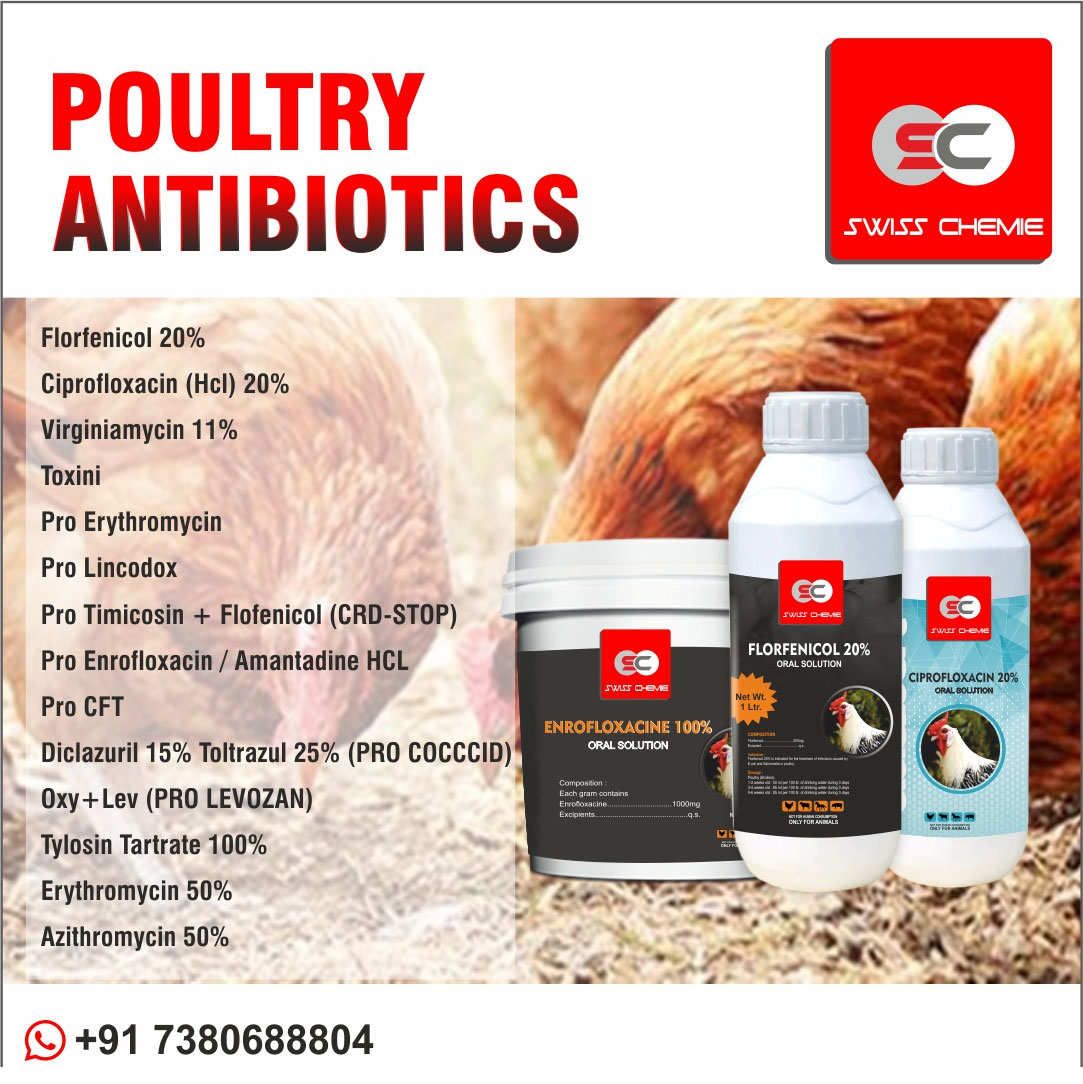
Antibiotic drugs are crucial in the fight against deadly diseases saving millions of lives across the world. In this context, Antibiotics used for animals & poultry help make food safe by reducing bacteria entering the food supply and keep chicken healthy.

WHY USE ANTIBIOTICS
On factory farms, antibiotics are used for two reasons : to promote growth as antibiotic administration results in rapid growth in chickens and secondly to prevent infection/diseases in poultry. When animals get sick from bacterial infections, they experience pain & suffering. Thus they are given antibiotics.
Thirdly, antibiotics are a part of sustainable production as responsible use of antibiotics helps keep chickens healthy thus minimizing the impact on environment. Sick chickens when left untreated have a larger environmental impact while the healthy ones use fewer natural resources like food and water.
APPLICATION OF ANTIBIOTICS
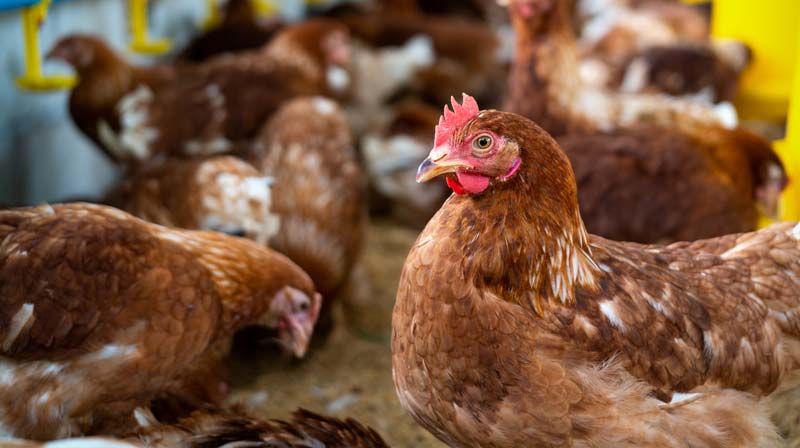
On a larger scale, antibiotics are administered in chicken animals living in stark harrowing conditions on factory farms. Drugs administered in factory farm chicks on a regular basis can be hazardous to human beings due to antibiotic resistance. In contrast, wild chickens despite various hidden threats from the environment, enjoy a life span of a decade or so without any human intervention. These drugs are regularly administered via daily water and food rations generally throughout the life span of chicks.
WHICH ANTIBIOTICS TO ADMINISTER
Some of the most popular poultry antibiotics are :
- Aminoglycosides (treat intestinal infections)
- Bambermycins
- Beta-lactams (two types: penicillins and cephalosporins)
- Ionophores (prevent intestinal infections)
- Lincosamides (combat joint and bone infections)
- Macrolides
- Quinolones
- Streptogramins
- Sulfonamides (prevent and combat Salmonella, E. coli etc.)